


Flight school
Our certified flight school offers in-depth training for helicopter and airplane pilots. Professionally accompanied by experienced flight instructors and state-of-the-art technology.
- Home
- Performance
- Flight school
Services
HELI-FLIGHT JLR
Your flying experience starts here
Do you have any questions? We are happy to help.
Contact information
Am Flugplatz
61203 Reichelsheim
Phone & E-Mail
Opening hours
Public holidays deviant
Your dream of flying
In our Approved Training Organization (ATO), we use our experience to provide you with competent, individualized training all year round. Our flight instructors have a combined total of well over 20,000 hours of flight experience and come from practical flight operations.
At our ATO, you have the opportunity to acquire, refresh or renew pilot licenses and type ratings as well as type ratings on helicopters and class ratings for aircraft. We will draw up an individual training plan for you that is tailored to your needs. If you wish, we can accompany you throughout your career with further training, additional training and annual check flights.
Are you passionate about flying and want to fulfill your dream of flying or are you planning to start a new career? With a trial flight or a trial day, you can take the controls yourself and experience the feeling of flying and working as a pilot.
ATO Training and Information Days In-person event
Information about the industry, the job market for pilots, and paths into the cockpit. Including snacks, a tour of the HELI-FLIGHT hangars, and an insight into flight operations.
Sat. 01/31/2026 – 10:30 AM
Sat. 04/18/2026 – 10:30 AM
Sat. 07/11/2026 – 10:30 AM
Sat. 09/26/2026 – 10:30 AM
Sat. 12/12/2026 – 10:30 AM
Registration under info@heli-flight.de
Trainings
PPL(H) - Private Pilot License Helicopter
Prerequisites
In addition, a background check in accordance with §7 and information from the driving aptitude register will be requested as proof of reliability for applicants. However, do not worry, even points are not an exclusion criterion. If necessary, this must be checked with the responsible authority on a case-by-case basis.
The student's level of knowledge and personality must enable him or her to follow the theoretical and practical lessons. In particular, knowledge of German or English must be sufficient.
Theoretical training
Training subjects are:
- Air law
- Flight performance and flight planning
- Human performance
- Operational procedures
- General aviation knowledge
- Meteorology
- Navigation
- Aerodynamics
- Theory of the respective aircraft type(s)
- And the radio operator's certificate BZF1, BZF2 or AZF;
You can start theory and practical training straight away from the start of training, but the first solo flight may only take place once you have passed all theoretical examinations with the relevant authority and have your radio operator's certificate. The first solo flight may only take place after the 20th flying lesson at the earliest.
Practical training
The practical training consists of the following parts
At least 45 hours total hours on helicopters
At least 25 hours flying time with instructor
At least 5 hours cross-country flight
At least 10 hours supervised solo flight
At least one triangular flight with 185 km / 100 NM and 2 fully completed landings
The practical examination then takes place with an examiner appointed by the authorities on the aircraft type of your choice.
Teaching material
Privileges
Facilitation of training
Theory facilitations
For the issue of a PPL(H), holders of an LAPL or higher in another aircraft category will receive full credit for theoretical knowledge in the general subjects. This crediting also applies to persons applying for a pilot's license who have already successfully passed the theoretical examination for the issue of this license in another aircraft category, as long as this is within the validity period. However, they must complete a quasi-reduced course (bridge course) in the subjects Fundamentals of Flying, Operational Procedures, Flight Performance and Flight Planning, General Aircraft Studies and Navigation and take an examination with the competent authority.
Practice facilitations
Applicants holding a pilot license for any other aircraft category except balloons will receive credit for 10 % of their total flight time as PIC on such aircraft up to a maximum of 6 hours.
The scope of the credit in no case excludes the requirements of 10 hours of supervised solo flight. These must include at least 5 hours of solo cross-country flight with at least one cross-country flight of at least 185 km (100 NM), during which fully completed landings were made at 2 aerodromes other than the aerodrome of departure.
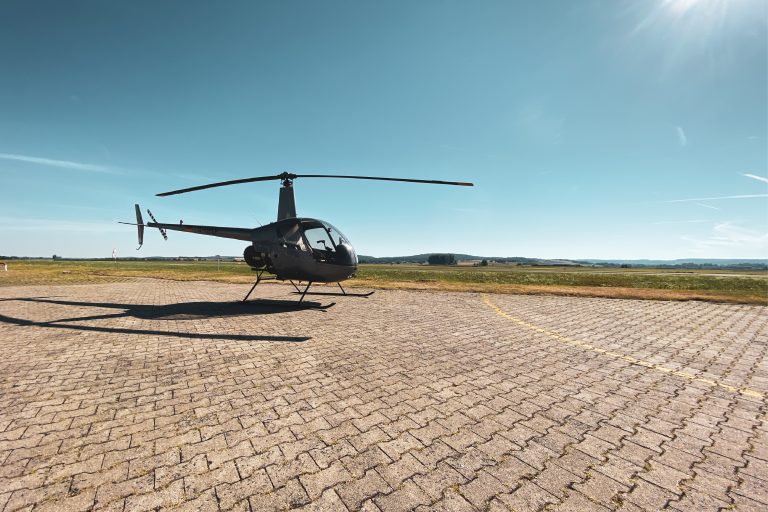
PPL(A) - Private Pilot License Aircraft
Prerequisites
In addition, a background check in accordance with §7 LuftSiG and information from the driving aptitude register will be requested as proof of reliability for applicants. However, don't worry, even points are not an exclusion criterion. If necessary, this must be checked with the competent authority on a case-by-case basis.
The student's level of knowledge and personality must enable him or her to follow the theoretical and practical lessons. In particular, knowledge of German or English must be sufficient.
Alternatively, you have the option of acquiring the LAPL(A) (Light Aircraft Pilot License) from us.
The LAPL(A) entitles the holder to fly aircraft with a take-off weight of up to 2,000 kg.
Up to three passengers may be carried. This must be demonstrated after ten hours as pilot in command following receipt of the license.
The license is recognized in EU countries and is less expensive to obtain. However, if you are planning to grow further in terms of flying, i.e. flying multi-engine aircraft, upgrading to instrument flight or professional pilot, i.e. if you want to carry more than three passengers, the internationally valid PPL(A) is recommended.
Minimum requirements for the LAPL (A):
Only 30 minimum hours on the aircraft are required. Of which:
At least 15 flight hours with flight instructor
At least 6 hours of cross-country flight alone with flight assignment
At least one solo cross-country flight of at least 150 km (80 nm) with a landing at a foreign airfield
The practical examination then takes place with an examiner appointed by the authorities on the aircraft type of your choice. (Cessna 150 or Piper PA28).
Theoretical training
Training subjects are:
- Air law
- Flight performance and flight planning
- Human performance
- Operational procedures
- General aviation knowledge
- Meteorology
- Navigation
- Aerodynamics
- Theory of the respective aircraft type(s)
- And the radio operator's certificate BZF1, BZF2 or AZF;
You can start theory and practical training straight away from the start of training, but the first solo flight may only take place once you have passed all theoretical examinations with the relevant authority and have your radio operator's certificate. The first solo flight may only take place after the 20th flying lesson at the earliest.
Practical training
The practical training consists of the following parts
At least 45 hours total hours on airplanes
At least 25 hours flying time with instructor
At least 5 hours cross-country flight
At least 10 hours supervised solo flight
At least one triangular flight with 270 km / 150 nm and 2 fully completed landings
The practical examination is then successfully completed with an examiner appointed by the authorities on the aircraft type of your choice (Cessna F150 or Piper PA28).
Teaching material
Privileges
Deadlines and requirements for the extension of the SEP authorization:
12 flying hours of which at least 6 hours as pilot in command (PIC)
12 take-offs and landings and
complete a refresher course of at least one hour's flight time accompanied by a flight instructor.
Or: Take a proficiency check with an examiner within the last 3 months before the authorization expires.
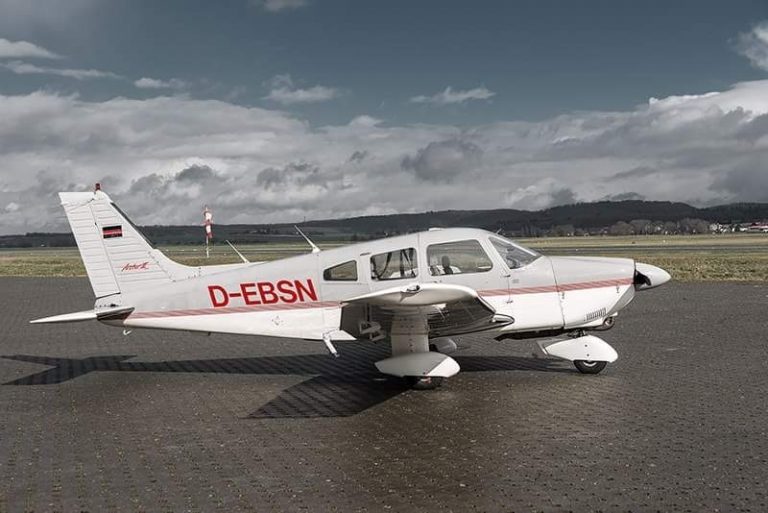
CPL(H) - Commercial helicopter pilot
Prerequisites
A valid type rating for ROBINSON R22, R44 or R66 and a valid class 1 airworthiness certificate are required at the start of training. Proof of sufficient knowledge of English, mathematics and physics is also required.
Furthermore, holders of a valid PPL(H) license must:
- Have at least 155 hours of total flying experience
- Of the total flight hours mentioned, at least 50 must be PIC flight hours, of which at least 10 must be cross-country flight hours.
Theoretical training
As a rule, the theoretical training takes place in a distance learning course with an attendance part at the airport in Reichelsheim.
We only recommend the CPL(H)+ATPL(H) theory to start your career as a professional pilot.
Practical training
In addition, training takes place in the helicopter right from the start. Training in a simulator is not planned.
The practical training consists of the following parts:
A total of 30 flying hours, of which:
- 20 flight hours VFR training
- 10 flight hours Basic Instrument Training (Sim. IMC)
For NVFR training 5 flight hours, of which:
- At least 4 flight hours NVFR Dual
- At least 1 hour of SOLO flying at night
HELI-FLIGHT GmbH & Co. KG focuses on realistic training, which is why SBTs (Scenario Based Training) are practiced.
Teaching material
Examination
License validity
The license itself is valid indefinitely. Each registered helicopter type must be renewed after 12 months. The conditions for these renewals are
- At least two flight hours per helicopter type in the last 12 months
- A check flight of at least one hour with an EASA-approved examiner
If you wish to carry passengers, you must also have completed three full take-offs, approaches and landings within the last 90 days.
Relief for license holders
- 20 flying hours in helicopters if you have a PPL(A)
- 50 flight hours in helicopters if the applicant holds a CPL(A)
- has 10 flying hours in motorized gliders
- 20 flight hours for airships, if a PPL(As) is available
- 50 flight hours for airships if the applicant holds a CPL(As)
Further training
Helicopter
NVIS - Training
HELI-FLIGHT has modified its fleet of AS 365 Dolphins to improve HEMS operations under NVIS. In order to keep the availability of our fleet as high as expected by our customers and operating costs low, we decided to modify a single Robinson R66 turbine for NVIS Basic Flight Training.
HELI-FLIGHT offers this affordable and comprehensive night vision ground and flight training with the first modified Robinson R66 turbine helicopter in Europe using the latest Generation III ANVIS-9 White Phosphor night vision goggles with 1600 and 1800 FOM.
Our Part-145 maintenance organization and night vision goggle repair shop guarantees maximum availability of the helicopter and NVIS equipment during the training period.
HELI-FLIGHT together with Aviation Specialties Unlimited, Inc. has achieved an EASA STC for the Robinson R66 turbine. We have a strong relationship with ASU, which provides NVIS modifications and night vision flight training around the world.
Based in EDFB / Reichelsheim near Frankfurt, we offer a variety of different sceneries from flat and bright urban to dark and sparsely populated hilly areas for Night Vision Flight Training.
We use the latest generation III ANVIS-9 White Phosphor goggles with 1600 FOM and 1800 FOM.
Ground and flight training can also be carried out with your night vision goggles in your area of operation throughout Europe.
EU(VO) 965/2012, SPA.NVIS.130, AMC1 SPA.NVIS.130(f)(1), GM1 SPA.NVIS.130(f), GM2 SPA.NVIS.130 (f), GM3 SPA. NVIS.130(f), GM1 SPA.NVIS.140 are covered by our ground and flight training. The training syllabus is approved by our national authority.
NVFR (H) - Night vision flight
Night flight training is now part of the regular training for professional pilots. However, private helicopter pilots can also obtain this additional qualification from us.
Prerequisites:
Holders of a PPL(H) who wish to obtain a night flying qualification must provide evidence of at least 100 hours as a pilot on helicopters flown after obtaining the license; this must include at least 60 hours as pilot-in-command on helicopters and 20 hours of cross-country flying.
Theoretical training:
The course includes 5 hours of theoretical training in the following subject areas:
Air law
Human performance
Navigation
Radio traffic
Behavior - special features for NVFR
Practical training:
The practical training comprises at least 15 flying hours, whereby the following points must be fulfilled as a minimum:
10 hours of instrument training time for helicopters with an instructor
5 flying hours at night, of which at least:
-3 hours of training with an authorized instructor, including at least one hour of cross-country navigation and
5 aerodrome circuits at night in solo flight with one take-off and one landing per circuit
TRI(H) - Initial (refresher and renewal)
Prerequisites:
Minimum age 18 years;
Suitability;
CPL, MPL or ATPL pilot license in the corresponding aircraft category required;
for a TRI(H) certificate SP SEH at least 250 hrs;
for a TRI(H) certificate SP MEH at least 500 hrs;
- of which at least 100 hours as PIC on SP MEH.
for a TRI(H) certificate MP MEH at least 1000 hours, of which
at least 350 hours as a pilot on MP MEH or
TRI(H) SP MEH holders must demonstrate at least 100 hours of experience under MP Ops. on the corresponding type
have successfully completed the MCC course according to FCL.735.H
Education:
The TRI(H) training SEH, MEH, MP MEH comprises at least:
25 hours of teaching and learning (these 25 hours are waived for holders of an FI(H) authorization).
10 hours of technical training including verification of technical knowledge, the preparation of
lesson plans and the development of training skills in the classroom/simulator;
5 hours SP or 10 hours MP flight instruction on the corresponding aircraft or simulator
At the end of the training course, the competence assessment according to FCL.935.TRI follows.
Rights of the TRI
The rights of a TRI include training for:
the issue, extension and renewal of type ratings;
MCC training, if holder of an MP MEH;
the extension of the IR(H) for SEH to the IR(H) for MEH
Restricted rights
If the TRI training is only carried out in a simulator, the rights of the TRI are limited to the training in the simulator.
The rights of a TRI(H) are limited to the sample in which the assessment of the
competence for the issue of the TRI certificate. The rights of the TRI(H) are extended to other samples if:
the technical part has been completed on the corresponding type or simulator;
at least 2 hours of flight instruction on the corresponding type;
competence assessment according to FCL.935 has been passed.
SE / ME IR(H) - Extension (EC155B/B1)
Airplane
SEP - Single Engine Piston
A valid EASA license LAPL(A)/PPL(A), CPL(A), ATPL(A) and a valid medical certificate.
Theoretical training
We provide you with the necessary knowledge in-house.
Systems, operating limits, flight performance, loading and center of gravity, emergency procedures and operational procedures.
The theoretical test is taken by the examiner on the day of the practical test before the test flight.
Practical training
At least 3 hours of flight training with at least 10 take-offs and landings with a flight instructor and 10 take-offs and landings under the supervision of the flight instructor are required for holders of the LAPL(A).
Holders of a PPL(A), CPL(A) or ATPL(A) should also consider this as a „minimum requirement“.
This is followed by the practical examination flight with an oral examination.
Privileges
With the class rating SEP(land), holders of the LAPL(A) are authorized to fly single-engine land aircraft up to a maximum take-off weight of 2000 kg as PIC. Up to 3 passengers may be carried.
For holders of a PPL(A), CPL(A) or ATPL(A), the maximum take-off mass of 2000 kg and the limitation to a maximum of 3 passengers do not apply.
Deadlines and requirements for the extension of the SEP authorization
Holders of an LAPL(A) may only exercise the privileges of their license if they have fulfilled one of the following conditions as an aircraft or TMG pilot in the last 2 years:
12 flying hours as PIC or with or under the supervision of a flight instructor,
12 take-offs and landings,
Refresher training of at least one hour total flight time with flight instructor.
Or they have passed an LAPL(A) proficiency check with an examiner.
Holder PPL(A), CPL(A), ATPL(A)
For the renewal of the class rating for single-engine piston aircraft SEP (valid for 2 years), with one pilot, the following requirements must be met within the last 12 months before the expiry of the validity:
12 flying hours of which at least 6 hours as pilot in command (PIC) on SEP and/or TMG
12 take-offs and landings and
carry out a refresher training course of at least one hour flying time accompanied by a flight instructor
or pass a proficiency check with an examiner within the last 3 months before the expiry date of the authorization.
Refresher training is waived for applicants who have completed a proficiency check for a class or type rating, a skill test or a competency assessment in another class or type of aircraft.
MEP - Multi Engine Piston
Applicants applying for a class rating for a single-pilot multi-engine aircraft for the first time must have completed at least 70 hours as pilot-in-command on aircraft.
In addition:
A valid EASA Class 2 Medical
A valid EASA Part-FCL PPL(A), CPL(A) or ATPL(A) license
Theoretical training
The theory course for a class rating for multi-engine aircraft with one pilot comprises at least 7 hours of theory lessons and takes place at our premises in Reichelsheim. The focus is on the aircraft's systems, general limitations, calculations of various weight and center of gravity positions, performance data and emergency procedures, ...
Finally, you will take the theoretical knowledge test, which we carry out in-house.
Practical training
The flight training includes at least 6 hours of flight training with a flight instructor, of which 2.5 hours under normal conditions and 3.5 hours in engine failure procedures and asymmetric flight techniques.
The practical examination can take place on our aircraft. It must take place within 6 months of the start of the class rating course and within a period of 6 months prior to the application for the class rating.
Privileges
With the MEP class rating, you can fly the corresponding types responsibly, according to visual flight rules.
The authorization to fly the Cessna 414 by instruments requires at least 5 additional hours of flight training if no instrument rating for multi-engine aircraft has been acquired.
Deadlines and requirements for the extension of the MEP authorization
The validity of the MEP class authorization is 1 year.
To renew the MEP class rating, applicants must:
Complete a proficiency check on the relevant type (or FSTD) within the last 3 months before the authorization expires
complete at least the following during the period of validity of the authorization:
10 route segments as a pilot of the relevant aircraft class and one route segment of the relevant aircraft class (or FSTD) flown with an examiner. This route section can be flown during the proficiency check.
The revalidation of a BIR or IR(A) can be combined with a proficiency check for the revalidation of a class or type rating, if available.
NVFR (A) - Night flight training
A valid Part-FCL license with registered SEP or TMG.
Holders LAPL(A): Before commencing night flight training, LAPL(A) holders must have completed the basic instrument flight training required for the issue of the PPL(A).
Theoretical training
The theoretical training takes place in Reichelsheim.
(no distance learning, no theory test required)
Practical training
At least 5 hours of flight training at night.
Of which at least 3 hours with flight instructor, including at least 1 hour of cross-country navigation with at least one cross-country flight of at least 50 km (27 nm) and
5 solo take-offs and 5 solo landings to a complete standstill.
The training must be completed within six months.
If applicants hold both a class rating for SEP (Land) and a class rating for TMG, they can fulfill the requirements in one of the two classes.
Once all the requirements have been met, the night flying license can be registered and no examination is required.
Privileges
With the PPL/LAPL (A) license extended by the night rating, you may fly virtually 24 hours under VFR in conjunction with the privileges granted to you.
The night flying license is partially credited to the IR(A) and CPL(A) training.
Tailwheel aircraft
A valid LAPL/PPL(A), CPL(A), ATPL(A) license with a registered SEP and a valid medical certificate.
Theoretical training
Theoretical training is not provided, but some topics relating to the handling of tailwheel aircraft must be taught. This takes place at the beginning of and during the differences training.
Practical training
There is no minimum number of hours, but you and we should be convinced that you are confident in handling our Maule. A good 3-5 hours is to be expected.
On completion of the differences training course, you will receive confirmation to fly tailwheel aircraft.
An audit does not take place.
There are practically no deadlines or requirements for the extension of the difference training. The entry remains valid as long as you keep your SEP authorization valid.
Privileges
After completing the differences training, you will be allowed to fly tailwheel aircraft (taildraggers).
Sample authorizations
Helicopter
Further options
At Leading Helicopter Academies